
Non-Contact Sensing
Mounted entirely above the liquid surface with zero mechanical wear, zero corrosion exposure, and zero maintenance.
Non-Contact Continuous Microwave Radar Level Measurement
The FlowDo Radar Level Transmitter provides non-contact continuous liquid and solids level measurement. Utilizing high-frequency microwave radar pulses, it operates reliably through vapor, steam, dust, and temperature variations without physical contact with the process medium.
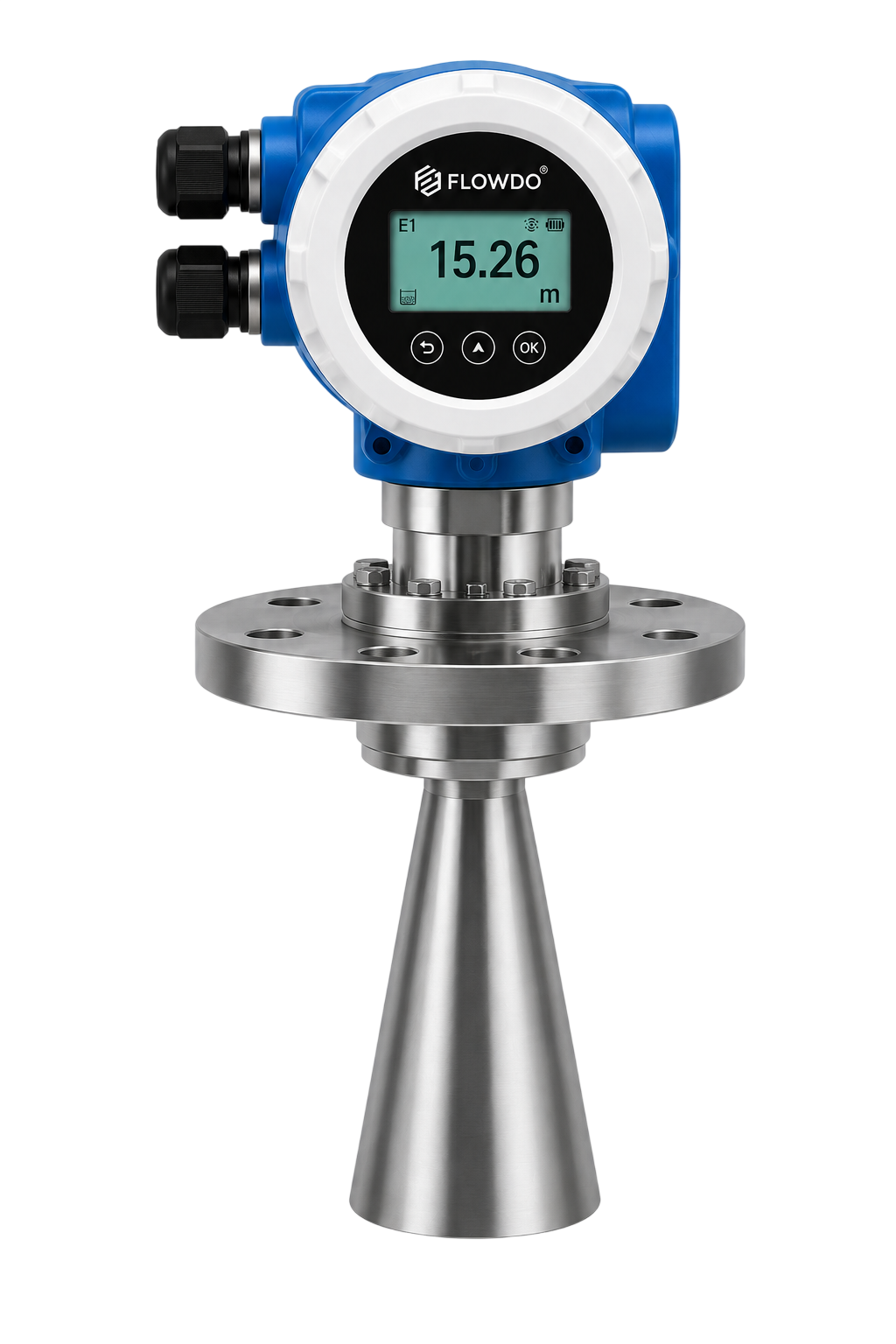
Advanced radar level measurement designed for challenging industrial tanks, chemical reactors, and process vessels.
The FlowDo Radar Level Transmitter emits focused high-frequency microwave radar pulses towards the liquid or solid material surface. When the radar beam reaches the medium interface, a portion of the electromagnetic energy is reflected back to the antenna receiver.
Using advanced Time-of-Flight (ToF) processing algorithms, the micro-controller calculates the exact distance from the antenna reference to the surface: Level = Vessel Height − Measured Distance. Because electromagnetic waves travel at the speed of light and do not require air as a transmission medium, radar measurement is unaffected by tank pressure, temperature, light vapor, or vacuum conditions.
Technical parameters for FlowDo Radar Type Level Transmitters.
Precision industrial radar sensing engineered for demanding tank environments.
Mounted entirely above the liquid surface with zero mechanical wear, zero corrosion exposure, and zero maintenance.
Microwave signals pass freely through steam, vapor, dust, and temperature layers that disrupt acoustic sensors.
Covers deep industrial storage tanks, tall bulk liquid silos, and large utility reservoirs with millimeter resolution.
Available with SS316 stainless steel horn antennas or fully PTFE-encapsulated sanitary and chemical flange assemblies.
Dual output capability enables simultaneous analog control loops and digital remote SCADA telemetry monitoring.
Operates reliably from full vacuum conditions up to 20 bar operating pressure inside sealed process reactors.
Non-contact continuous level measurement across demanding industrial vessels and processing facilities.
Acids, alkalis, solvents, and corrosive chemicals in sealed reactors with PTFE-encapsulated antennas.
Diesel, petroleum fuels, crude storage tanks, and solvent holding vessels requiring non-contact safety.
Deep sumps, sludge holding basins, intake reservoirs, and chemical mixing tanks with high surface humidity.
Hygienic batch vessels, CIP holding tanks, and sanitary liquid storage with clean-in-place flange connections.
Bitumen, hot oils, boiler condensate, and high-temperature process tanks with cooling extension flanges.
Grains, plastic pellets, cement, and bulk minerals in storage silos up to 15 meters.
Seamless signal transmission from field radar measurement to industrial plant control architecture.
Comparison of primary FlowDo continuous level measurement instruments.
Technology selection should consider medium characteristics, tank geometry, installation access, measurement range, temperature, pressure, atmosphere and required accuracy.
FlowDo level instruments can be selected according to measurement range, process connection, material compatibility, output and installation requirements.
Explore complementary FlowDo instruments for level measurement, indication and process monitoring.
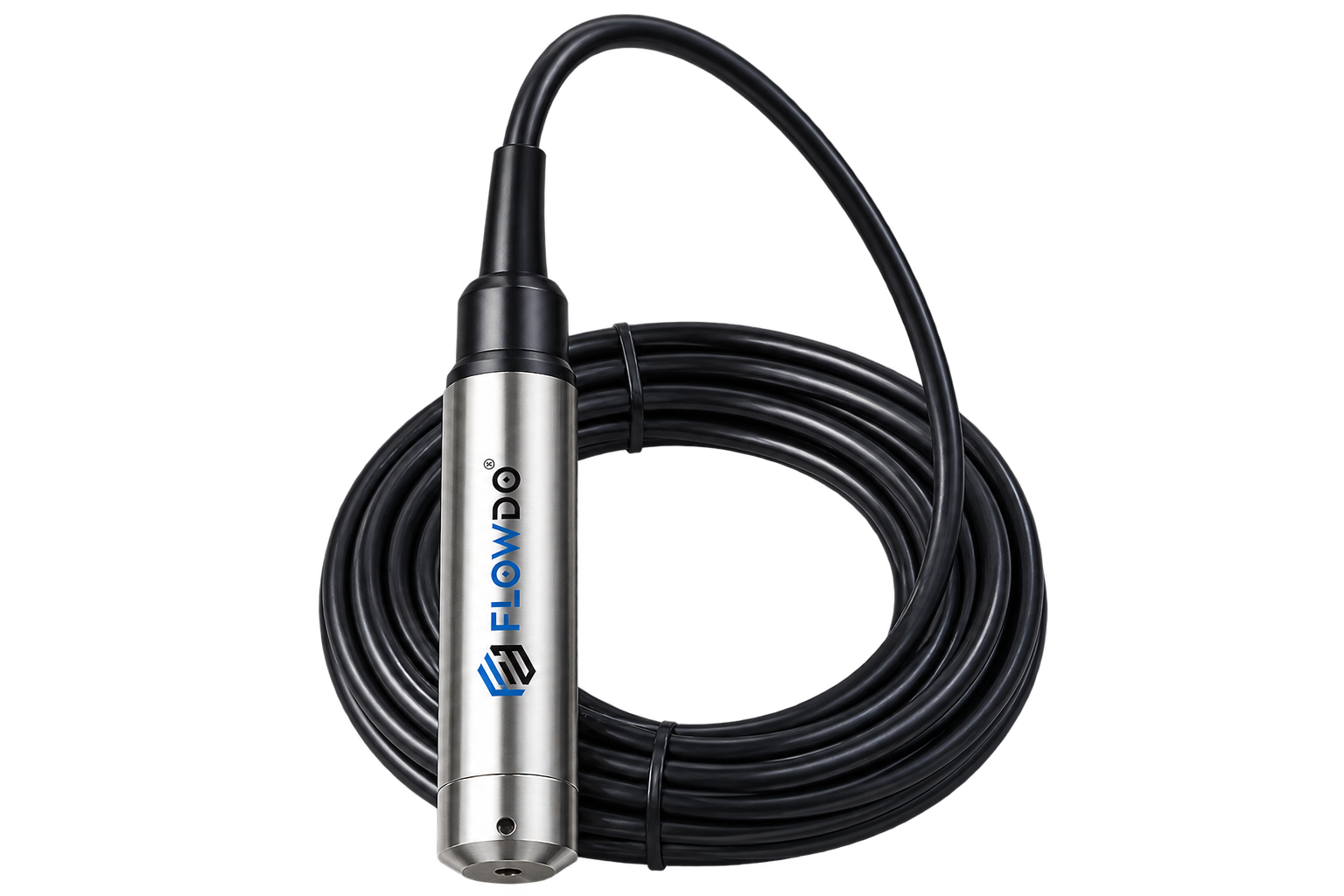
Model FLD-HLT Submersible hydrostatic level transmitter for continuous liquid-level measurement in tanks, reservoirs, sumps and open channels.
View details & specs →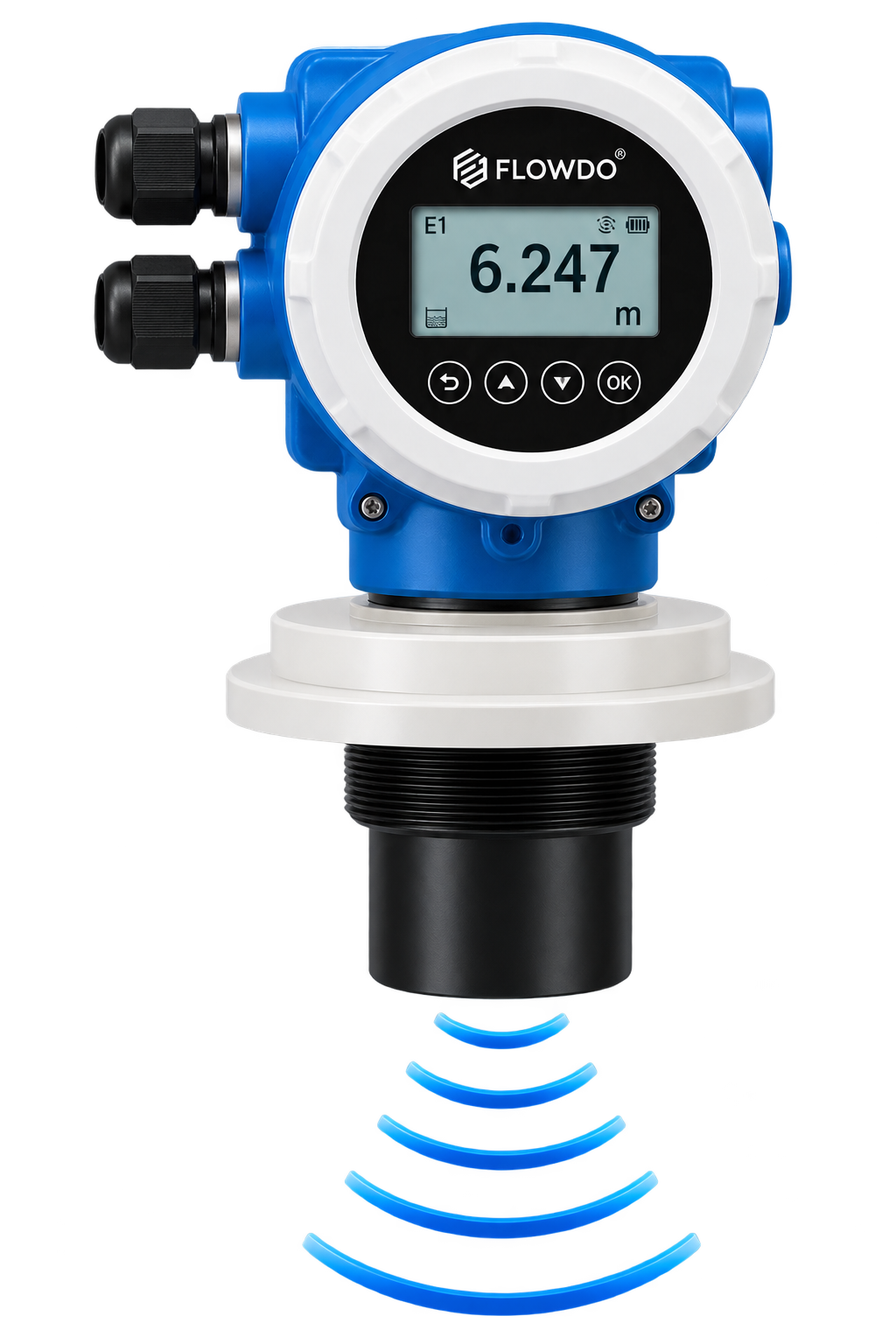
Non-contact ultrasonic transmitter for continuous liquid level measurement in tanks, vessels and industrial water applications.
View details & specs →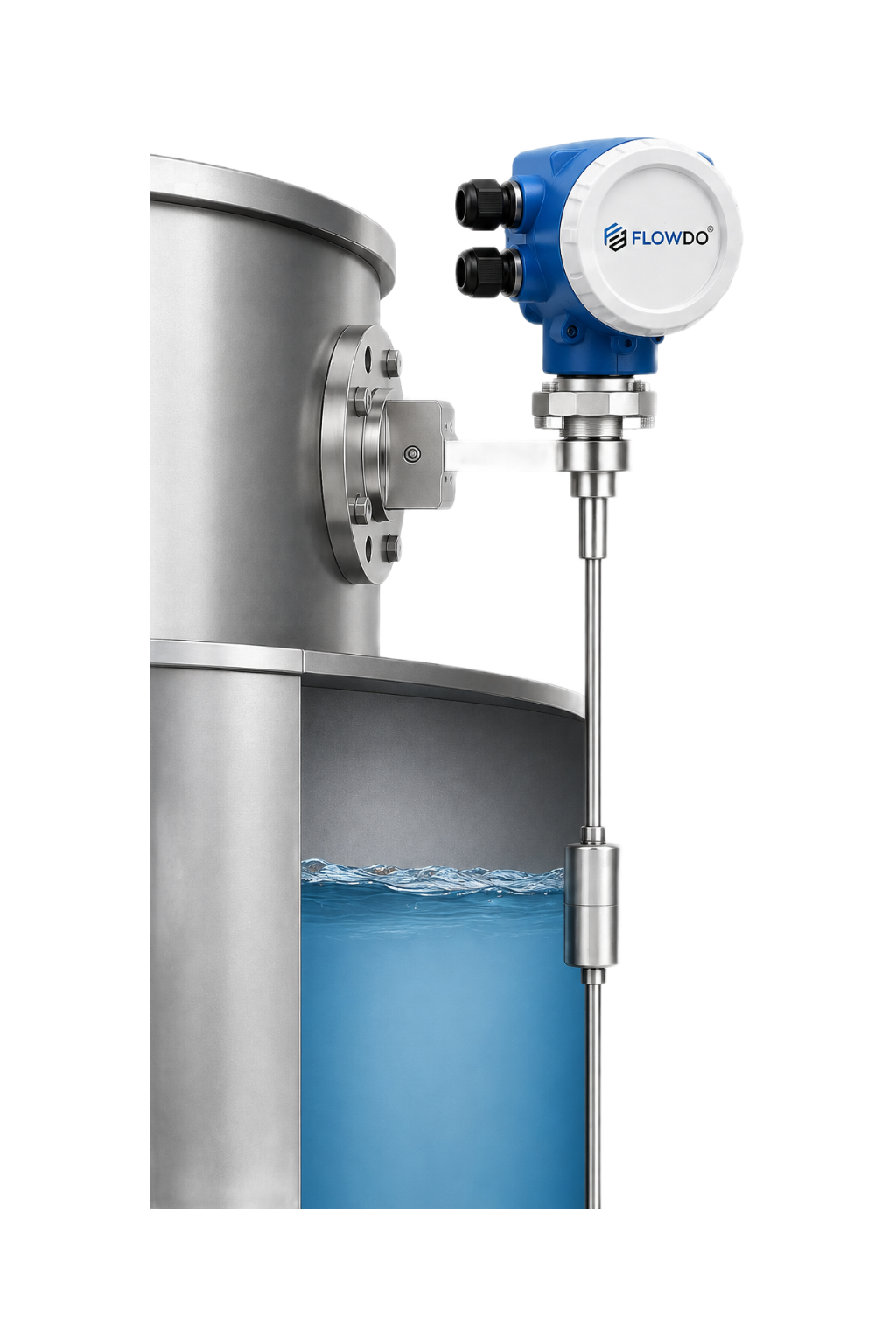
Side-mounted continuous liquid level transmitter for accessible side process connections in industrial tanks and vessels.
View details & specs →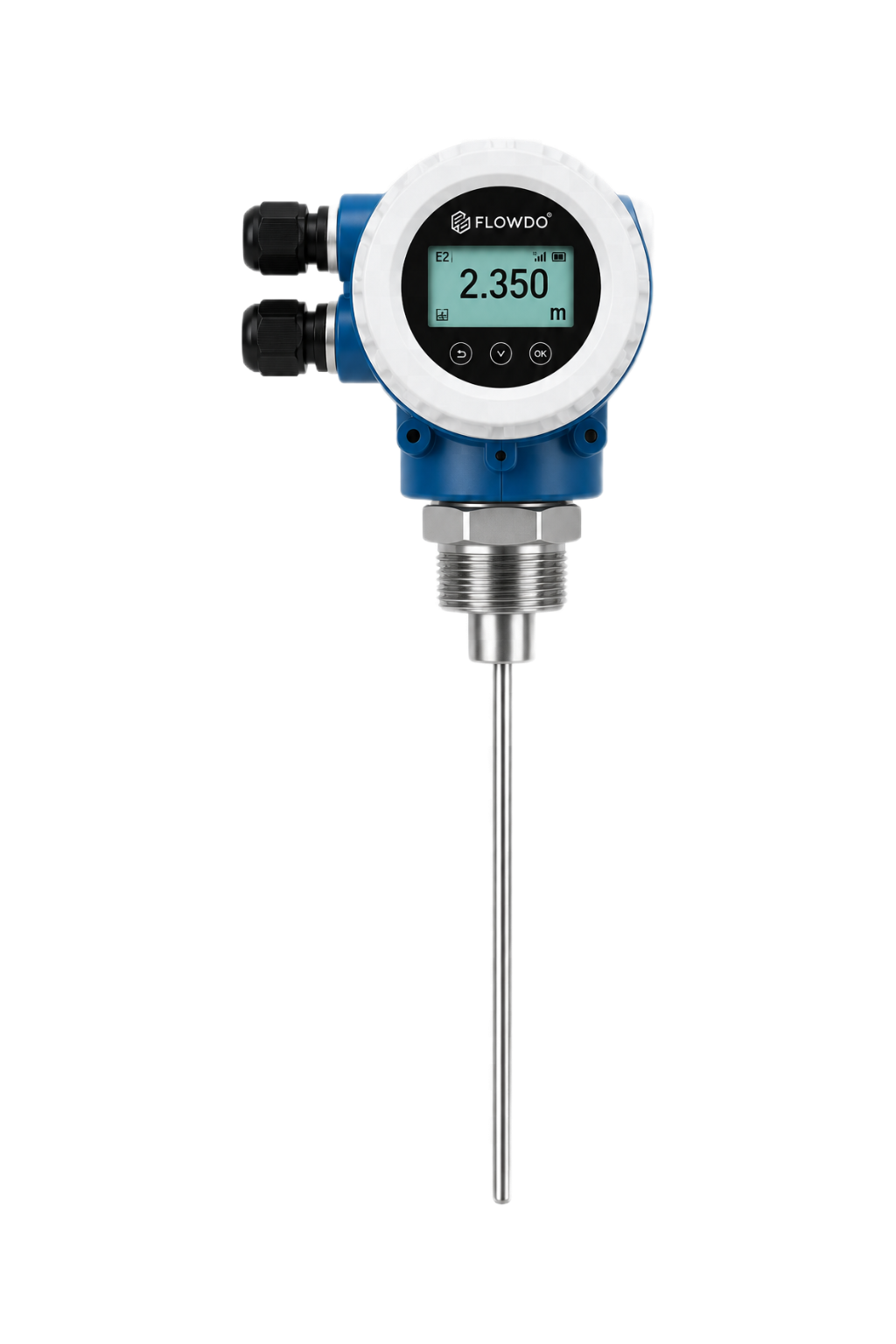
Continuous capacitance-based level measurement for compatible industrial tanks, process liquids and vessels.
View details & specs →Common questions regarding radar level measurement, installation and configuration.
A radar level transmitter uses electromagnetic radar energy to determine the distance to a material surface and convert that measurement into continuous level information.
Standard top-mounted radar level transmitters can provide non-contact measurement. The exact construction depends on the selected FlowDo model.
Radar uses electromagnetic energy, while ultrasonic transmitters use acoustic sound waves. Their suitability depends on the medium, tank geometry, measurement range and process conditions.
Compatible transmitter configurations can provide process outputs suitable for integration with PLC and other control systems. Available outputs depend on the selected model.
Yes, when the selected transmitter output and system architecture are compatible, the level signal can be integrated into PLC/SCADA monitoring systems.
Application suitability depends on the radar technology, medium properties, foam/vapor characteristics, tank geometry and selected transmitter. The application should be reviewed rather than assuming universal suitability.
For non-contact radar models, the sensing device is mounted above the material and does not require a submerged measuring probe.
The mounting position should provide a suitable measurement path while considering tank geometry, nozzles, internal obstructions, inlet streams and the requirements of the selected transmitter.
Tank dimensions, minimum and maximum levels, installation position, blocking distance and the supported range of the selected model should be considered.
There is no universally best technology. Selection depends on the process medium, tank configuration, measurement range, environmental/process conditions, required accuracy and installation requirements.
Share your tank dimensions, process medium, measurement range, temperature, pressure, process connection and output requirements with FlowDo to identify a suitable configuration.
For faster selection, provide: Tank Height • Measured Medium • Range • Temperature • Pressure • Connection • Antenna Type • Output Requirements