
Thermocouple Input
Designed to receive the low-level millivolt voltage generated by compatible industrial thermocouple sensors.
Reliable Thermocouple-Based Temperature Measurement for Industrial Processes
The FlowDo Thermocouple Temperature Transmitter processes the low-level millivolt signal generated by a compatible thermocouple sensor and converts it into a standardized process output for accurate temperature indication, remote monitoring and plant automation.
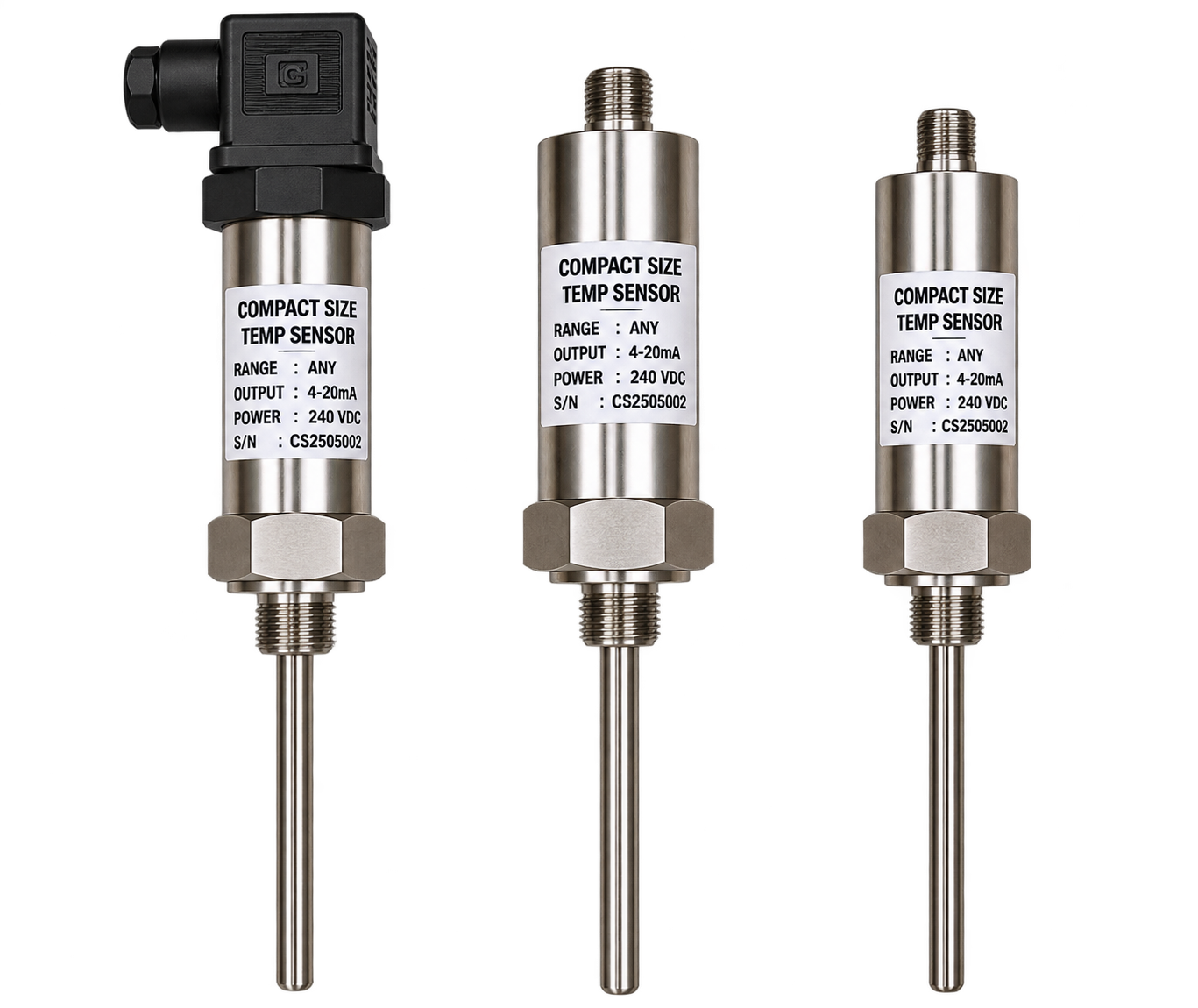
Precision thermoelectric signal conditioning engineered for industrial thermal processes, furnaces, pipelines, and equipment.
The FlowDo Thermocouple Temperature Transmitter is designed for industrial applications where process temperature must be measured using a compatible thermocouple and transmitted to remote monitoring or control equipment. A thermocouple consists of two dissimilar metallic conductors joined at a sensing junction, where a temperature difference produces a small thermoelectric voltage (Seebeck effect).
The transmitter measures this low-level millivolt signal, applies required cold-junction compensation and conditioning, and converts the resulting temperature measurement into a standardized process output supported by the selected FlowDo configuration. The output can then be directly interfaced with indicators, controllers, PLC systems, and SCADA platforms.
Note: Thermocouple type, temperature range, probe/sheath construction, process connection, output and housing should be selected for the actual process application.
Technical parameters for FlowDo Thermocouple Temperature Transmitters.
Engineered for dependable temperature monitoring across demanding industrial environments.
Designed to receive the low-level millivolt voltage generated by compatible industrial thermocouple sensors.
Processes raw thermocouple millivolts into a standardized, linearized, and noise-immune industrial signal.
Provides continuously updated process temperature information for automated control systems and telemetry.
Accounts for the reference-junction terminal temperature to ensure accurate real-world process readings.
Compatible FlowDo configurations provide 4–20 mA current loop output for straightforward control integration.
Supported outputs interface smoothly with digital process indicators, PID controllers, PLCs, and SCADA.
Thermocouple-based temperature monitoring across key thermal and process manufacturing sectors.
High-temperature monitoring in industrial heat treatment furnaces, drying ovens, and ceramic kilns.
Flue gas monitoring, boiler exhaust ducts, steam headers, and thermal fluid distribution lines.
Process reactors, cracking units, distillation columns, and chemical piping with compatible wetted materials.
Turbine exhaust ducts, generator cooling circuits, heat recovery steam generators (HRSG), and energy plants.
Hot melt skids, plastic extrusion lines, die casting equipment, and industrial thermal packaging machinery.
Process-fluid temperature measurement across industrial storage vessels and high-temperature transport piping.
Seamless signal transmission from field thermocouple measurement into plant automation architecture.
Comparison of primary FlowDo temperature measurement instruments.
Technology selection should consider medium characteristics, operating temperature range, required measurement accuracy, installation access, environmental conditions, and automation requirements.
Key technical parameters to define for configuring a suitable temperature measurement assembly.
Define minimum, normal, and peak operating temperatures to select the appropriate thermocouple type and sheath rating.
Confirm thermocouple type (e.g. Type K / J / T / etc.) and junction construction (grounded for fast response or ungrounded for isolation).
Check oxidizing, reducing, or corrosive chemical characteristics to select suitable probe sheath materials (SS316, Inconel, Ceramic).
Determine probe diameter, insertion length (immersion depth), process mounting thread/flange, and thermowell compatibility.
Confirm 4–20 mA process output, power supply voltage, proper thermocouple conductor polarity (+/−), and cable routing.
Identify connecting automation equipment including FlowDo digital process indicators, PID controllers, PLCs, or SCADA RTUs.
Explore complementary FlowDo instruments for temperature, humidity, indication and process monitoring.
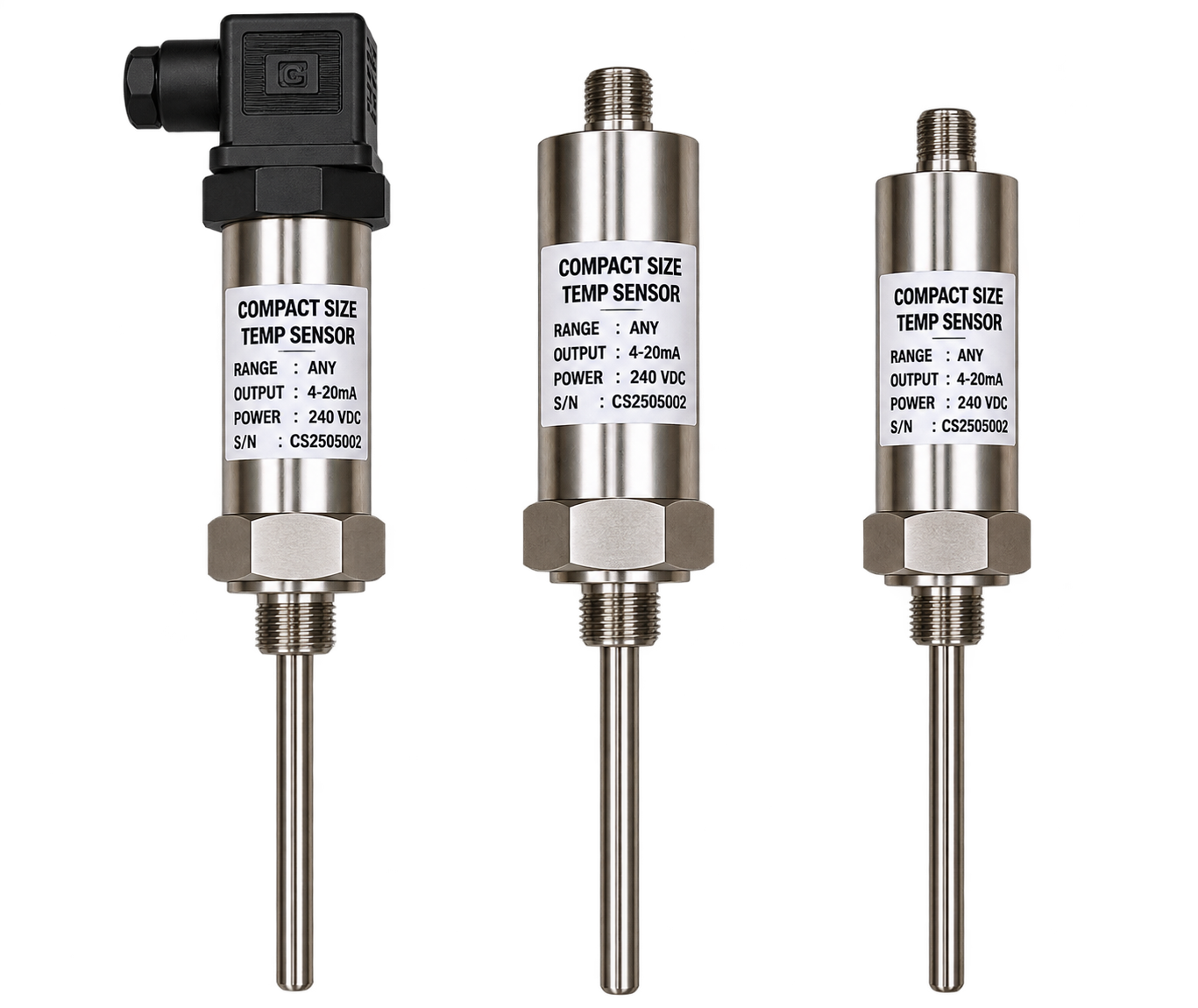
Industrial RTD temperature transmitter for accurate process-temperature measurement and control-system integration.
View details & specs →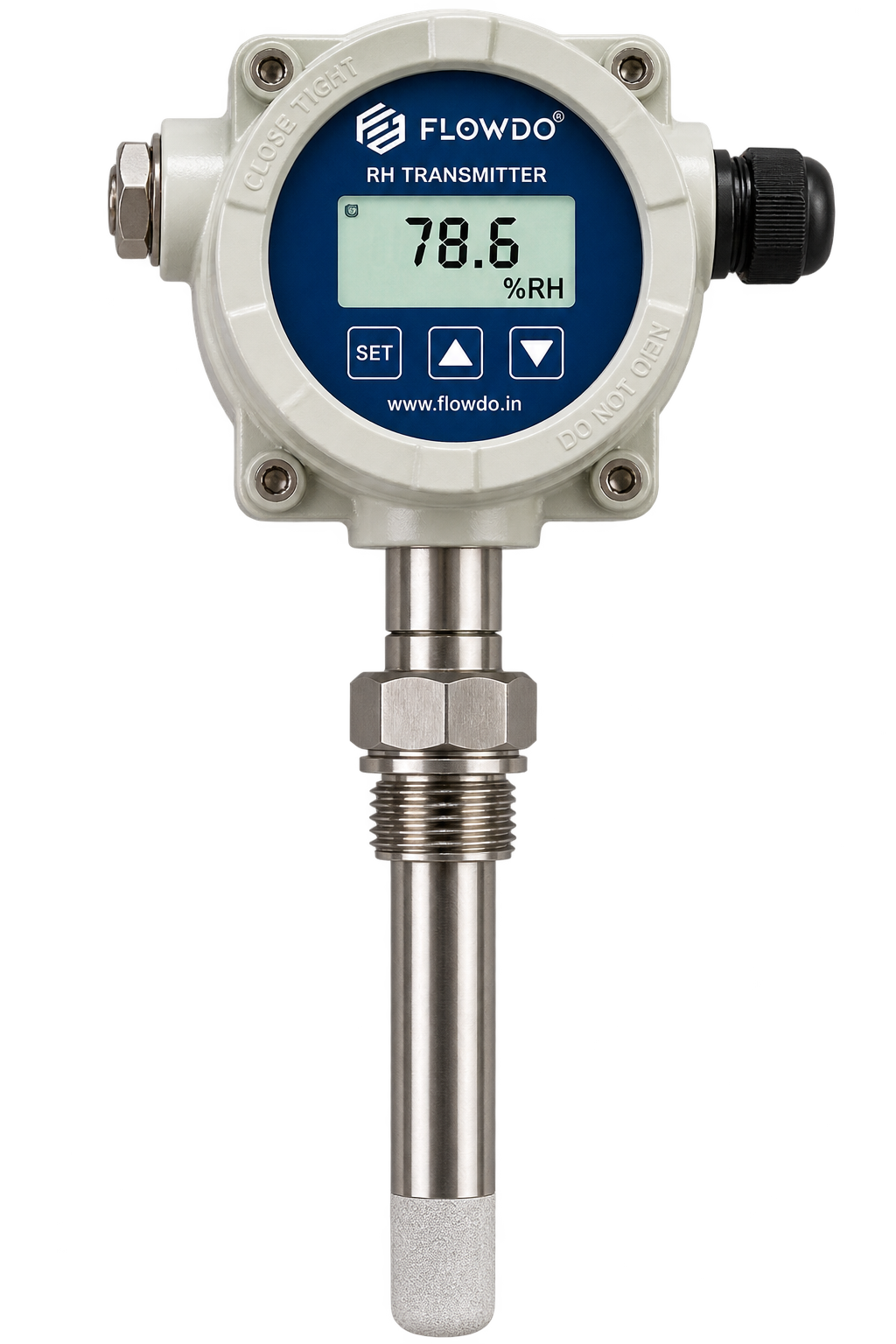
Industrial relative-humidity and temperature transmitter designed for humidity measurement in biogas, wet gas and process gases.
View details & specs →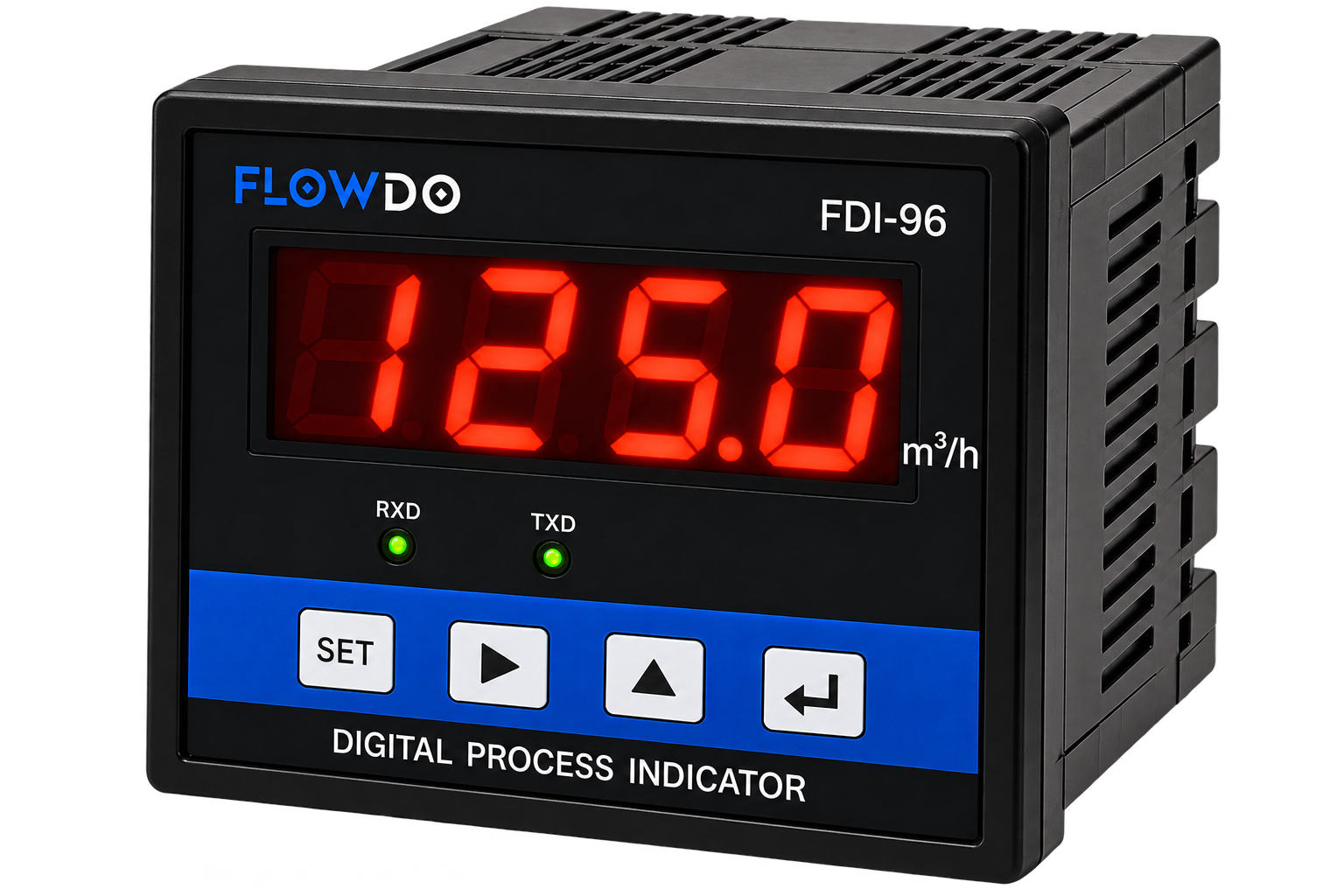
FDI Series Programmable panel-mounted digital indicator for accurate monitoring of temperature, pressure and process transmitters.
View details & specs →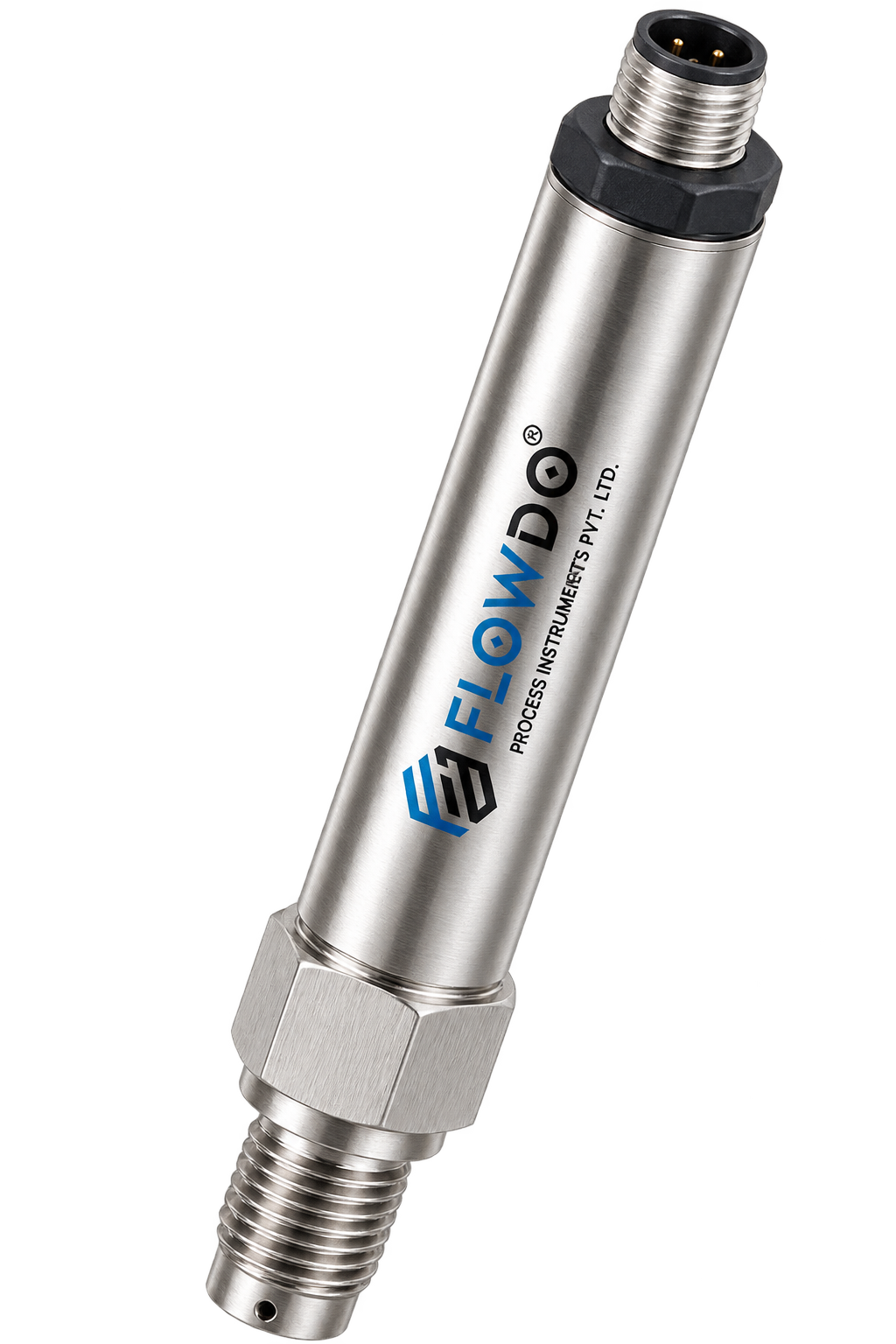
Compact stainless-steel pressure transmitter designed for reliable pressure measurement across demanding industrial applications.
View details & specs →Common technical questions regarding thermocouple sensing, Seebeck effect, signal conversion, and industrial installation.
A thermocouple temperature transmitter receives the low-level voltage generated by a thermocouple, processes the measurement and converts it into a standardized output (such as 4–20 mA) suitable for monitoring or control.
A thermocouple uses two dissimilar conductor materials. A temperature difference between the measuring junction and reference connections produces a thermoelectric voltage related to temperature.
The Seebeck effect describes the thermoelectric voltage generated when a closed circuit formed by two dissimilar metals experiences a temperature gradient across its junctions.
Cold-junction compensation accounts for the ambient temperature at the thermocouple reference connection terminal so the actual process temperature at the measuring tip can be calculated accurately.
Supported thermocouple types depend on the selected FlowDo model and configuration (such as Type K / Model Dependent). Available inputs should be verified for the specific requirement.
Yes, compatible FlowDo configurations provide a standard 2-wire 4–20 mA analog current loop output for direct interfacing with PLCs and control systems.
Yes, when the transmitter's process output is connected to compatible analog PLC input cards (4–20 mA) or digital telemetry RTUs.
A thermocouple produces a thermoelectric voltage suitable for broad and high-temperature ranges, whereas an RTD changes electrical resistance with temperature and provides high stability over moderate ranges.
Thermocouple signals are polarity-sensitive (+/−), so positive and negative conductors must be connected correctly to the transmitter terminals to prevent inverse readings.
No, standard copper wire creates secondary thermocouple junctions that cause measurement errors. Proper thermocouple extension or compensating cable matching the thermocouple type must be used between the sensor and transmitter.
Yes. A compatible thermowell isolates the thermocouple probe from direct process pressure, corrosive chemicals, and high velocities, allowing sensor replacement without system depressurization.
Insertion length should be chosen to position the measuring junction sufficiently into the fluid stream (typically 1/3 to 1/2 of pipe diameter) to prevent heat dissipation errors through the pipe wall.
Share your temperature range, thermocouple type, process medium, probe dimensions, connection, mounting arrangement and required output with FlowDo to identify a suitable thermocouple temperature transmitter configuration.
For faster selection, provide: Temperature Range • Thermocouple Type • Process Medium • Probe Diameter • Insertion Length • Process Connection • Thermowell Requirement • Required Output